Geographical Differentiation: Maritime, Boreal, and Volcanic
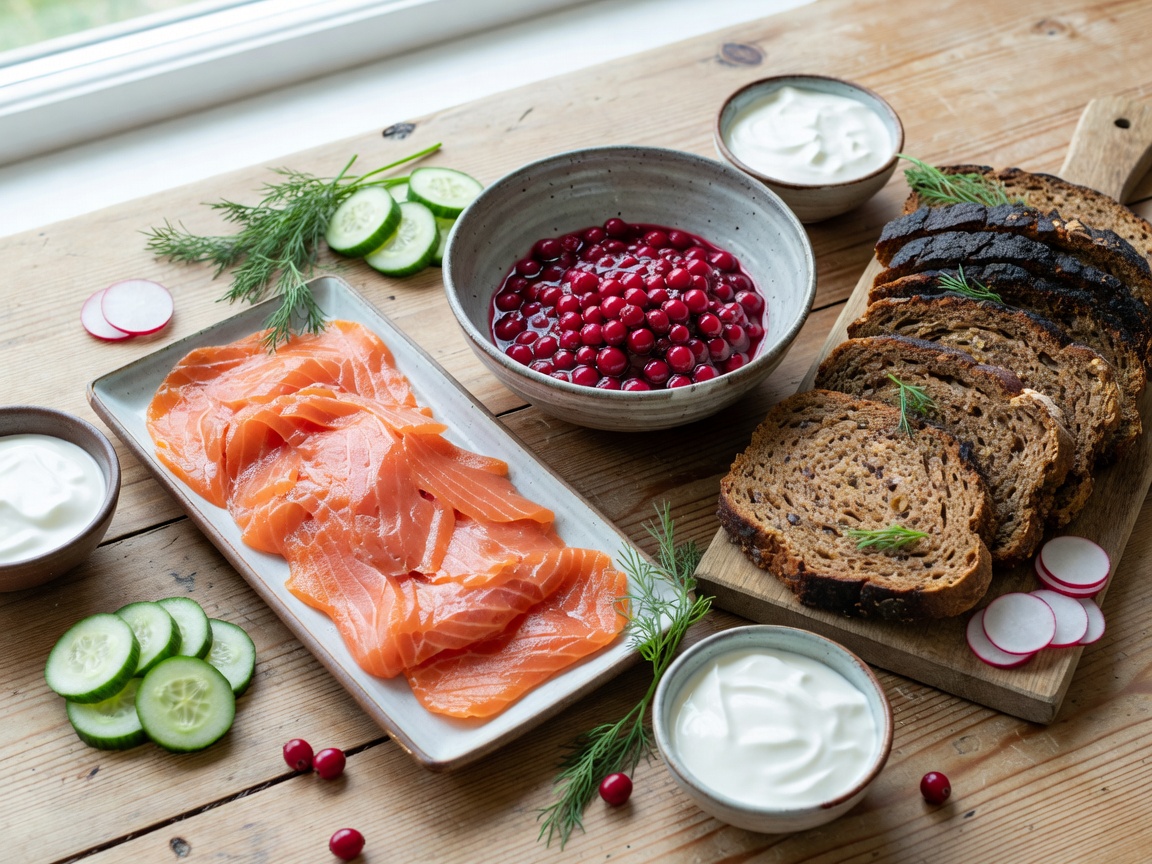
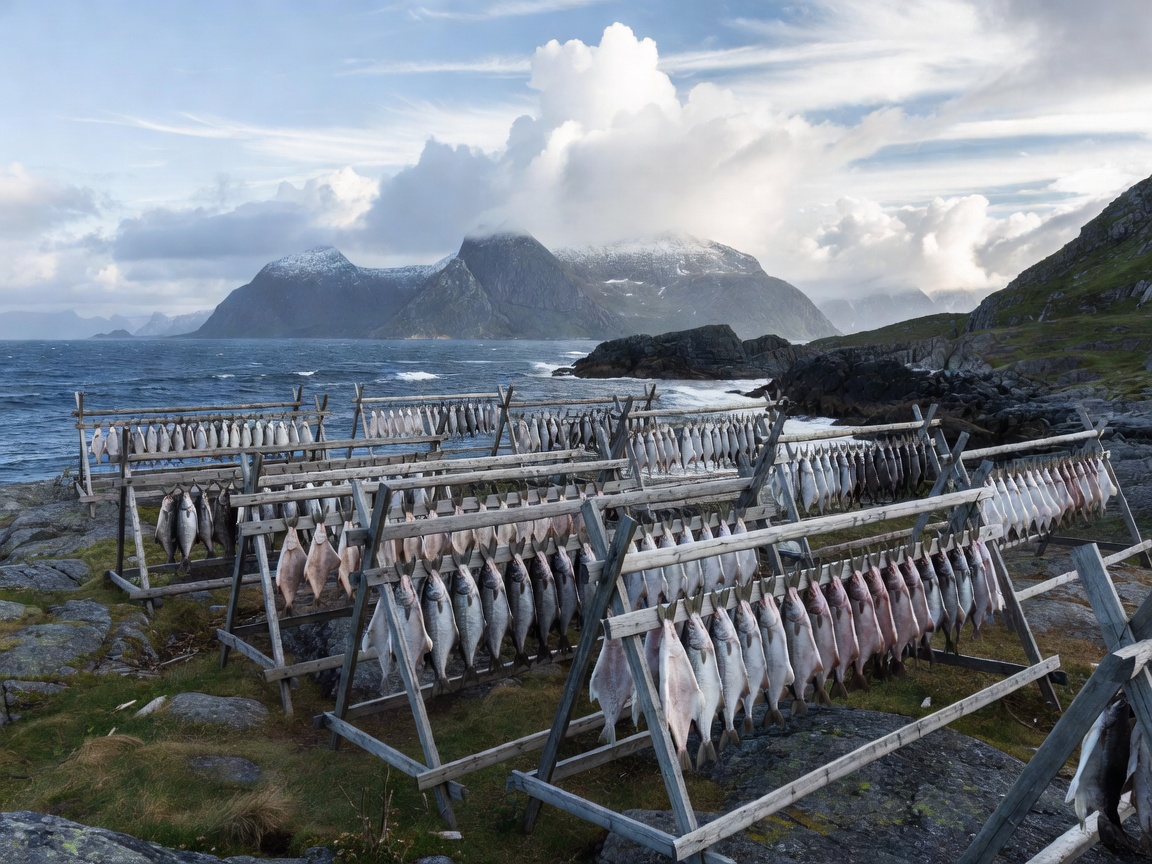
To treat Nordic cuisine as a single monolithic tradition ignores profound environmental demarcations. Denmark is predominantly low-lying, calcareous, and agrarian, with intensive grain farming, pig husbandry, and shallow maritime waterways. Danish cooking evolved around dense sourdough rye loaves (rugbrød), butter-rich emulsions, salted pork belly (flæskesteg), and vinegar-pickled herring (marineret sild). In contrast, Norway is defined by dramatic fjord bathymetry, narrow arable ribbons, and the unforgiving North Atlantic. Norwegian food history is intrinsically anchored in pelagic preservation: salt-cured cod (klippfisk), air-dried stockfish (tørrfisk) hung on wooden drying racks across the Lofoten archipelago, and brown whey cheese (brunost or geitost), produced by slow-caramelizing goat or cow whey until milk sugars brown into rich fudge notes.
Sweden bridges central Scandinavian forestry and Baltic fishing. Its cuisine balances agricultural dairy foundations with wild boreal game like moose (älg) and roe deer, accented by wild lingonberries (Vaccinium vitis-idaea). In Finland, culinary heritage draws equal weight from eastern Slavic influences: the extensive use of rye sourdoughs in Karelia, turnip pasties, and barley puddings baked slowly in ceramic vessels within cooling masonry ovens. Iceland represents volcanic isolation: wind-swept pastures support hardy Icelandic sheep whose wool and meat have sustained settlements since the ninth century, alongside seabird harvests and wind-fermented Greenland shark (hákarl), which relies on sub-zero breezes to oxidize urea and trimethylamine oxide compounds.
Marine Protein Architectures
Across the North Atlantic, the Norwegian Sea, and the brackish waters of the Baltic, fish represents far more than an animal protein source; it was the primary currency of northern trade. Salt cod trade between Bergen and Southern Europe established maritime shipping corridors by the thirteenth century. In modern kitchens, cod cheek (torsketunger) pan-fried in butter and poached Skrei cod loin remain seasonal touchstones in Tromsø and Bodø during winter spawning migrations.
Compare this maritime abundance to the Baltic Sea coasts of Sweden and Finland, where lower salinity levels support smaller Baltic herring (strömming). The Swedish tradition of canning fermented strömming (surströmming) under controlled lactic acid and anaerobic bacterial maturation remains one of the world's most pungent and chemically fascinating live preservation arts, documented in culinary records since the sixteenth century.
Grains, Dairy, and Boreal Sweeteners
Wheat cultivation was historically restricted by northern frost lines. The core carbohydrate spine of the Nordic region belonged exclusively to rye (Secale cereale), barley (Hordeum vulgare), and oats (Avena sativa). Swedish tunnbröd and Norwegian flatbrød were rolled thin and baked dry on iron griddles (takke), yielding brittle shelf-stable flatbreads capable of lasting through multiple winters without mould contamination. In Finland, dark sourdough rye (ruisleipä) was designated the national food in 2017, celebrated for its 100% whole-grain extraction, dense crumb, and lactic sourdough bite.
Cultured dairy provided necessary fats and active bacteria. Long-milk (långmjölk or filbunke), cultured using butterwort leaves (Pinguicula vulgaris) or specific Leuconostoc mesenteroides strains, creates a ropy, viscose fermented milk that provided essential gut microflora long before commercial probiotics existed. Sweetness was rarely derived from refined sugar; instead, lingonberries, cloudberries (rubus chamaemorus), rowanberries, and reduced birch sap yielded tart, pectin-rich compotes that accompanied rich roasted game and fatty waterfowl.
The Dialectic of Wild Game and Forest Foraging
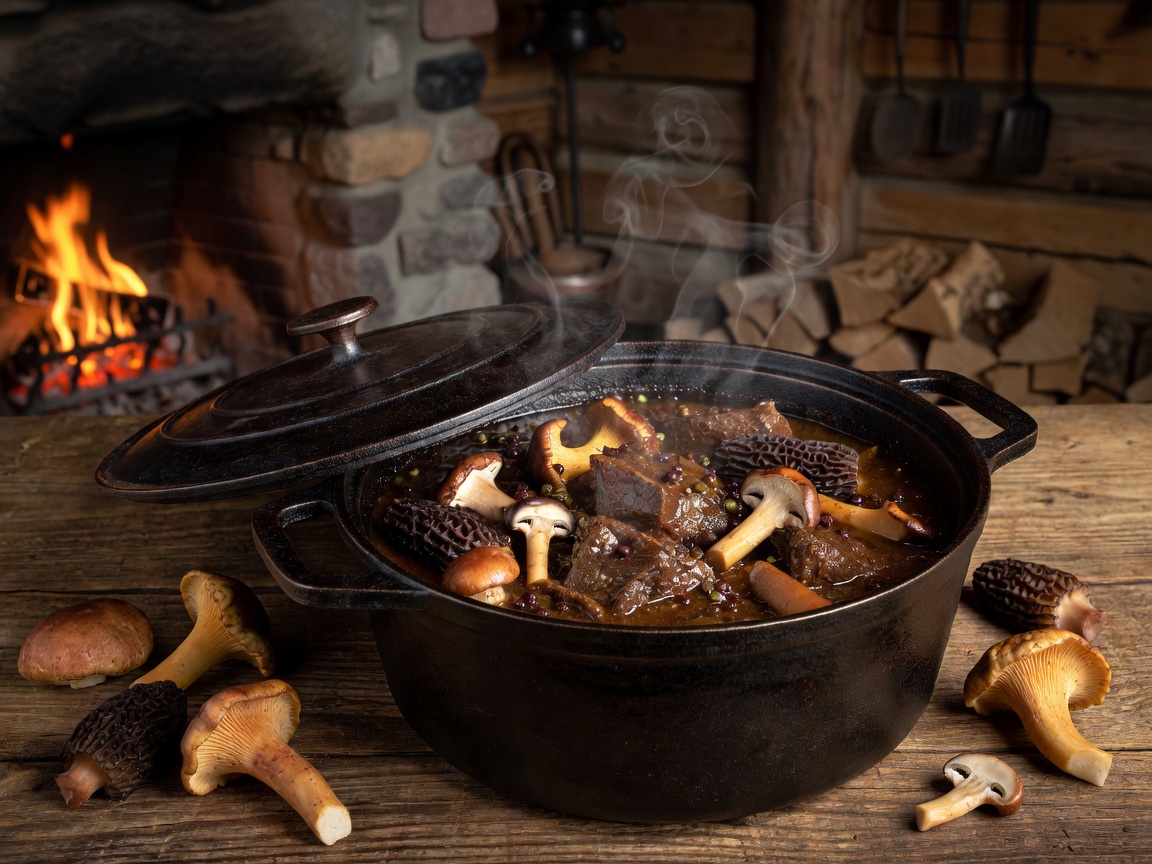
The universal Nordic legal principle of Allemansrätten (Everyman's Right) in Sweden, Finland, and Norway grants public freedom to forage wild berries, herbs, and mushrooms across uncultivated forest floors. This customary right sustained rural households through centuries of lean harvests and remains central to the region's culinary mindset. In autumn, Finnish families harvest chanterelles (Cantharellus cibarius) and funnel chanterelles (Craterellus tubaeformis), pairing them with slow-stewed reindeer (renskav) served over mashed Almond potatoes (mandelpotatis).
Modern Nordic restaurants do not treat these ingredients as rustic novelties; they isolate the volatile esters of pine needles, wood sorrel (Oxalis acetosella), and meadowsweet to replace citrus and imported spices. Understand how contemporary restaurant innovators apply these forest assets by reading our dedicated dispatch on Modern Nordic Restaurants.
Comparative Culinary Summary
| Nation | Staple Carbohydrate | Defining Protein Focus | Preservation Paradigm | Archetypal Native Herb / Botanical |
|---|---|---|---|---|
| Denmark | Sourdough rye (Rugbrød) | Salted pork, pelagic herring | Vinegar marinade, cold smoking | Dill, horseradish, mustard seed |
| Norway | Barley flatbrød, potato lefse | Atlantic cod (Skrei), mountain mutton | Wind-drying (tørrfisk), brine salting | Caraway, juniper berry |
| Sweden | Knäckebröd, barley tunnbröd | Moose, Baltic strömming, meatballs | Lactic fermentation, sweet pickling | Dill crown, lingonberry acid |
| Finland | Ruisleipä, barley Karelian pasties | Perch, pike, braised reindeer | Oven drying, smoke sauna curing | Birch leaf shoots, wild sea buckthorn |
| Iceland | Rugbrauð (steamed pot bread) | Icelandic lamb, ocean char, seabirds | Geothermal steaming, lactic whey curing | Iceland moss (Cetraria islandica) |
Explore the Biological Foundation of Nordic Flavours
From sub-arctic sea kelps to birch sap reductions, examine how regional botanicals and cold waters dictate kitchen practice.
Read Local Ingredients Analysis